Seeds of Hope
RainforestECO – Regeneration & Youth Impact
Kids Concert + Moms Cookies = 2,000 Trees
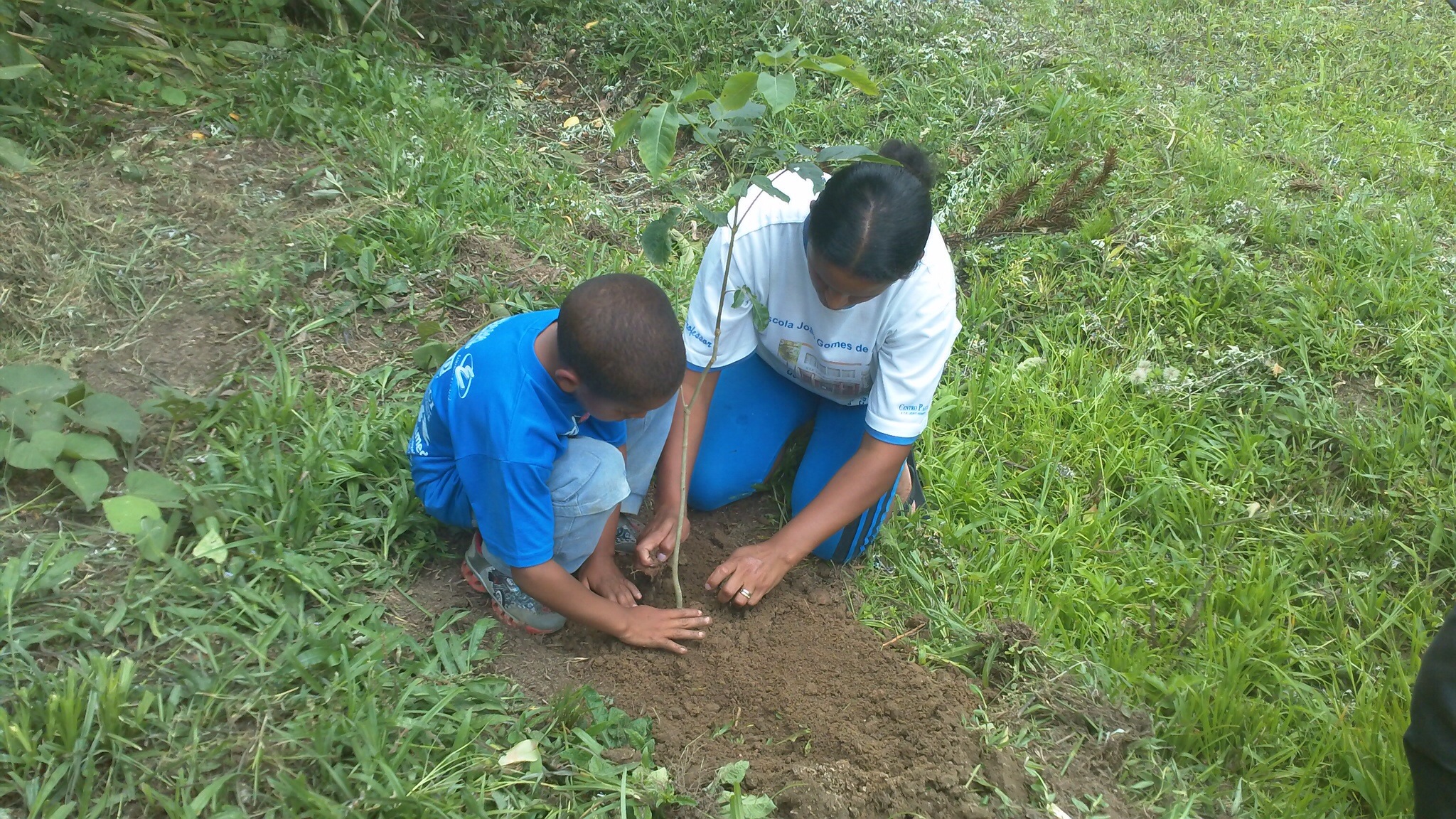
Thanks to the initiative of the Kids For Environmental & Social Action (KFESA), 2,000 native species trees are on their way to farmers in Lorena, Sao Paulo, Brazil for the reforestation of Mata Atlantica. These young people poured their hearts and souls into music, from classical to original compositions to Led Zepplin, as their moms baked their finest deserts to raise funds for Rainforest ECObank’s project.
We Plant Hope
This has been such week for planet Earth and its inhabitants, with the challenge being to find hope amidst the news of disaster and destruction. But thanks to the efforts of women who bake cookies and homeschool their children who play music – from their own compositions to the classics to Led Zeplin – we were able to raise sufficient funds to purchase 2,000 rainforest trees that are now on their way home. We plant Hope.

Greenwash, Fair Trade or Exploitation?
In Brazil, the contrast between fair trade and exploitation can be as vivid as the culture. As a Brazilian-American, I see with both eyes: the challenge is enforcement of well intentioned legislation on behalf of social justice and the environment. Perhaps the very Brazilian quality of “jeitinho” that knows how to skirt around obstacles, can use that energy now, to become deft leaders in the movement toward true social and environmental justice.
My awareness has developed over the last months of working closely with a rural association of rainforest tree growers, who are adhering to the Ministry of Agriculture’s regulations for sustainable seed harvest and tracking, while using organic nursery practices. They have an unsold crop of nearly 250,000 trees this year, despite a documented cry for billions of rainforest trees by both the government and NGOs engaged in reforestation along diminishing waterways. Yet so far their biggest buyer appeared from the US – me – bringing funds raised from school children and private donors who want to contribute to reforestation in a way we can monitor.
I’ve learned that the existing nurseries who supply reforestation programs are subsidized by large corporations (what soda makes you happy?) who contribute to water loss, and chemical companies whose products are mandated for use by one of the NGOs they support. Labor in one huge nursery operation I learned of, is free, coming from prisoners, while the plants they grow are being sold by a distribution nursery at a huge profit, to corporations who want to appear more green. It appears that their seed sources are neither tracked, nor come from within the legal area for collection and distribution of native plants of the bio region. The growers make nothing. The seller makes a killing. The rainforest is being replanted with trees from a different bio region.
Is that fair trade? Not if you use the definition supplied by Princeton:
“trade that satisfies certain criteria on the supply chain of the goods involved, usually including fair payment for producers; often with other social and environmental considerations trade that is conducted legally”
Recently Ben and Jerry’s made a commitment to switch to only Fair Trade ingredients by 2013. While they are engaged with products that are familiar to all – chocolate, nuts, flavorings – we are engaged with products that have international, measurable, life-affirming, long-term value. We’re in the business of global cooling. Our ultimate product is clouds, produced by rainforest trees. The people who grow these trees deserve to be paid fairly, without being muscled into the use of chemicals or greenwashing, to make a living wage for their entrepreneurial efforts.
The trees grown by these unsubsidized, organic nurseries, could ultimately sink 250,000 tons of carbon, and reforest 296 acres this year. (Note: If we were to plant 4 billion acres of trees, we would increase global cloud cover by 2% and reverse global warming.) They have complied with all government regulations, even though there is no enforcement of penalties for those who don’t, and who profit by selling their crops outside of the mandated bio-region.
Wouldn’t it be interesting, if the support these nurseries need to sell their crops at a price that actually covers their expenses, allowed them to benefit communities in their region with employment, education, and reforestation skills, came from the global grassroots who applaud their courage?
A Hard, Dry Moment During Rainy Season
While I do my best to be patient with the process of fundraising, it’s challenging when I know how many lives – both of trees and people – hang in the balance while doing it. In this case, 25,000 trees sit rootbound in little black plastic sacks that they’ve outgrown, in near 100 degree heat, waiting for someone to buy and plant and maintain them.
And it’s not looking too good for the nurserymen who took the initiative to grow these trees either. Investing their personal resources to meet nature’s call for the forest to be restored, and the call of organizations and even the government for reforestation seedlings, it’s a hard, dry moment.

I learned during my recent trip to Guartingueta and Cunha, that despite the call for these seedlings, no one seems willing or able to buy them – at least not at a price that is realistic for the economy of the area. So they grew from seedlings to saplings that aspire to become rainforests.
The government is slow and chaotic to work with. Maybe that will change someday, but no one is holding their breath.
A huge NGO we all know, and love(d), has a huge campaign for reforestation in the Atlantic Rainforest, with a stated need for billions of seedlings, but is not willing to pay for them. They have a nursery that’s subsidized by a chemical company to supply them. So paying a fair trade price to rural entrepreneurs who put their own ass-ets on the line turned out to be my dream, not theirs. In fact, they told us if I would raise the funds, manage the project and then give them the paperwork, they might include us as one of their projects under their banner that is so attractive, and bring a few cents to the people who planted the trees to maintain them. No. Thank you though.
Turn the Crisis Around. Now. Please.
More reinforcement for our position that reforestation is not only critical for the environment, but also for the people who do the work of growing and planting in their local areas. We are intent to make a positive impact for local people of Cunha and Guaratingueta, Brazil.
New research is also helping make clear that saving our environment doesn’t mean compromising our future. According to this study, protecting rainforests reduces poverty as well as conserving biodiversity. The analysis revealed that “the introduction of measures to protect rainforests and ecosystems in Costa Rica and Thailand over the past 40 years have improved the livelihoods of the local population.” Proving once again how the benefits of a healthy environment extend far beyond the trees. And it’s not just scientists who are realizing the advantages of understanding and preserving our planet. The corporate world is also getting in on the action, as seen in this article that reveals how businesses are taking design inspiration from the natural world to improve “their green credentials and drive design innovation.”
As our first article highlights, we have much to do as individuals and a global community in order to turn our environmental crisis around, and unfortunately, time is not on our side. The author applies the theme of this year’s World Environment Day, Many Species, One Planet, One Future, to help remind us of our “complete and critical dependence on our environment.” Also pointing out the urgency by emphasizing that, “the momentum towards environmental catastrophe builds at a cascading pace.” However, the author gives hope that just because we’ve started this mess, doesn’t mean we can’t clean it up. Stating that “through cooperation, common purpose and shared goals about our environment and our future” we will be able to change our path of destruction.
Whether it’s getting to work on time, or crossing off the last item on our bucket list, life is a race against the clock – and right now, we aren’t winning. We’ve spent the last decades without much regard to how our actions will impact our ecosystems and environment, forgetting that our own future depends on the health of our Earth. But now that we’ve started to see the consequences of our actions, as well as realize the immense benefits we can gain through understanding and preserving our environment, it’s becoming clear how important it is to save our planet. And while we can’t turn back the hands, or stop the seconds from ticking, we can make sure we don’t waste the precious moments we are given. We, along with our partner Rainforest Alliance, hope you will take the time to help us work towards a future where our environment not just survives, but thrives, for generations to come.
We Replant a Rainforest – Want to Help?
Meet Dito, one of many Dito’s you’ll find in rural Brazil. An affectionate derivative of the name “Benedict,” it seems to acknowledge a simple connection with the Earth. At least, that’s the way I see it. My best friends in Brazil even call me Dita, and for me, that’s a great embrace. But, I digress, back to this Dito’s story…
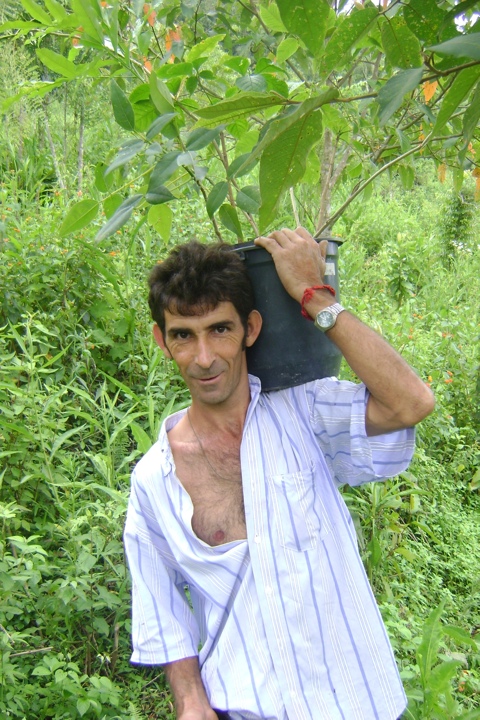
When we first met a few years ago, I tapped his knowledge of the plants of the Atlantic Rainforest, in his role as caretaker of the grounds of the Cunha EcoVilla. He not only cares for the land there, but he also shares his country wisdom with residents and visitors to the learning center, and cross-pollinates as he can with his local neighbors. It’s people and relationships like this, that represent the change needed in the area, to move toward reforestation of degraded farm lands.
So this time when I went back to give 1,000 trees to residents of Cunha (thanks to the generosity of our partner, Bom Jardin nursery, sponsors and crowd-funding donors) the EcoVilla came to collect some trees to plant on the land where people come to learn about permaculture.
They were planted by Dito with the resident family of the EcoVilla, Zaida, Dennis and little Ananda.
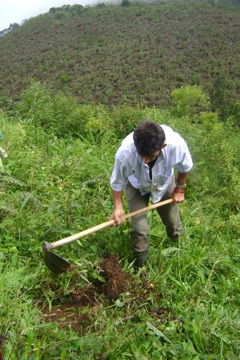
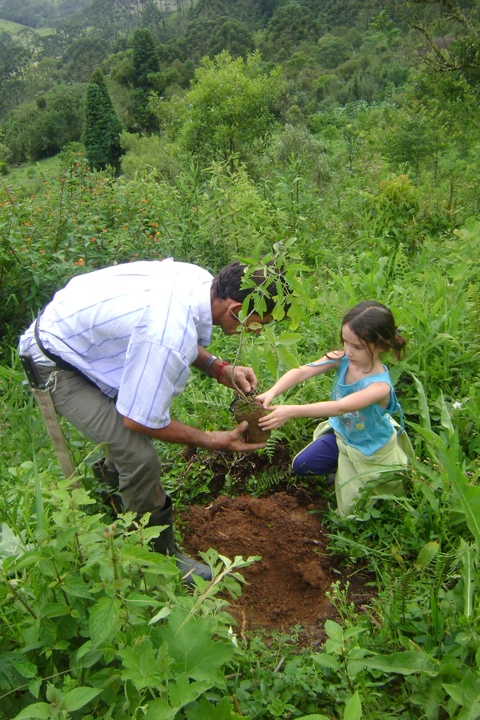
Why does this matter? We feel it’s a perfect place to bring you, our visitors who want to learn about the Atlantic Rainforest, its native trees and plants, permaculture, and how we can make significant contributions to reverse global warming through reforestation. And, you can help us plant some trees – then have a swim under the waterfall!
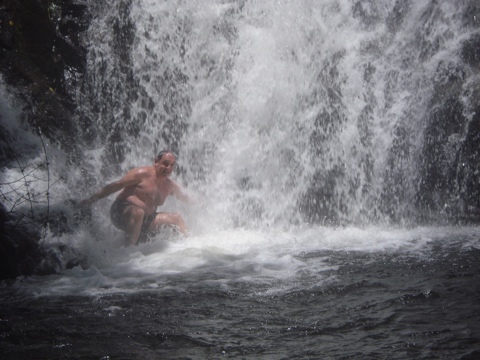
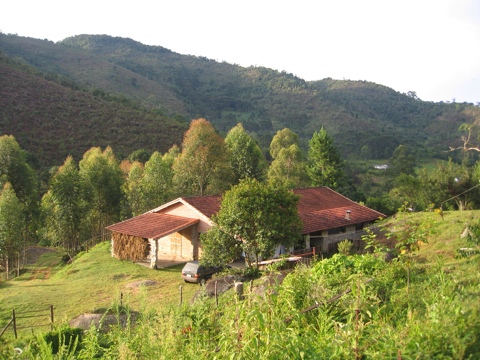
Several Ditos will be there to welcome you! Stay tuned for news about our first ECO tours coming this year.
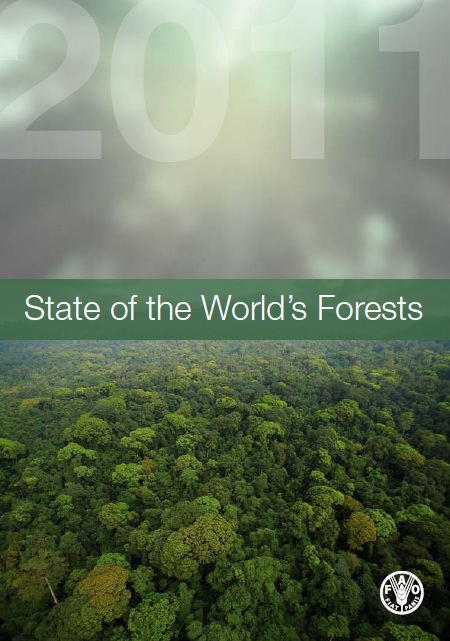
The State of the World Forests report by the UN for the International Year of Forests 2011
The year 2011 has been designated ‘The International Year of Forests’ by the United Nations General Assembly. This builds on momentum already generated in other international arenas, such as those related to climate change and biodiversity, to bring even greater attention to forests worldwide. Work is progressing rapidly on international forest issues and this edition of State of the World’s Forests focuses on a number of critical themes designed to stimulate greater analysis during the International Year of Forests.
… The 2011 issue takes a more holistic approach to the multiple ways in which forests support people’s livelihoods under the theme ‘Changing pathways, changing lives: forests as multiple pathways to sustainable development’. To explore this theme, the report tackles three core subjects – sustainable forest industries, climate change and local livelihoods – and examines their potential to stimulate development at all levels. In addition, we present new regional level analyses drawn from the Global Forest Resources Assessment 2010 (FRA 2010).
Read more by clicking on the image to download the report.
This only helps to deepen our commitment to the work we’ve begun in Mata Atlantica, working with rural communities, associations and growers to build a foundation for a sustainable future, together.
International Year of Forests 2011
On Feb. 2, 2011 the UN declared this the International Year of Forests. Good idea, we agree! Now, let’s buy, give and plant the next 25,000 trees in Mata Atlantica…
Celebrating Forests for People
Welcome to the International Year of Forests, 2011 (Forests 2011) Web site, a global platform to celebrate people’s action to sustainably manage the world’s forests. The United Nations General Assembly declared 2011 as the International Year of Forests to raise awareness on sustainable management, conservation and sustainable development of all types of forests.
Here, you will find information regarding events being organised throughout the International Year as well as interactive web tools and resources to promote dialogue on forests. Tell us how you plan to celebrate “forests for people” during 2011, so that we may showcase your stories and initiatives through this website.


Deforestation DOES increase flooding risks
Since Charles Darwin University found in 2007 that “a 10% increase in trees being cut down increased the risk of flooding up to 28%, should we be surprised that a forest that was 93% destroyed (the Atlantic Rainforest in Brazil) just suffered flooding of epic proportions?
Might it be worth putting time, energy and money into reforestation initiatives in the area? We firmly believe so.
Deforestation increases flooding risks
An international team of scientists, including experts from Singapore, has proven for the first time that deforestation increases the risk of flood disasters, which kill thousands of people and cause billions of dollars in damage each year.
With every 10 per cent increase in trees being cut down, the flood risk increases by up to 28 per cent, the researchers from Australia’s Charles Darwin University and the National University of Singapore found. “This has huge implications for governments of developing nations trying to save lives and reduce expenditures,” said its lead researcher, Dr. Corey Bradshaw, associate professor of environmental sciences at Charles Darwin University. He added that the team “found real evidence that deforestation also leads to more intense and devastating floods that kill more people and damage more property.”
No research previously had proved that cutting down trees could lead to more floods. To do so, the team looked at data from 56 developing countries across Africa, Asia and Central and South America, between 1990 and 2000. It found that nearly 100,000 people were killed, and 320 million displaced by floods during this time, with damages exceeding US$1.151 trillion (S$1.7 trillion).
The work, which was published in the scientific journal Global Change Biology, was highlighted in the publication Nature.
See the complete article in The Straits Times (Singapore).
Posted By Anne-Sophie Samjee at 9:31am on October 10, 2007
Defy. Commit. Share. NOW.
Why not…
– defy despair with hope?
– commit to healing this wounded Earth NOW. Not next year. NOW.
– share our passion to change the pictures we see on front pages, to ones that actually make us wake up with excitement for a new day?