Do you remember the iGiveTrees team? If not, please visit the page to see who’s written this guest post: Leonardo Andrade. He’s a dear friend who helped to conduct bilingual team meetings and meet in person with planting partners in Brazil, when I was no longer traveling there. As a recent participant in COP30 in Belem, he shared a highlight with us all. Enjoy!
My First COP: What Belém and the Sociobio Restaurant Taught Me About Climate Action
It was my first time at a COP — a climate change COP — in my country, in the Amazon, in Belém. I fell in love with that city when I went there for the first time, 25 years ago. I was totally surprised by a culturally vibrant city that had much more to offer than the natural beauty I expected to find. So, I was really looking forward to being there.
My first impression upon entering the Blue Zone was of a large, formal, fairly typical conference. Many people, formally dressed, were running up and down the corridors. After a couple of hours, other types of characters started to appear: Indigenous groups, activists giving speeches with microphones, and people from all over the world wearing their regional clothes — creating an enchanting atmosphere of diversity and hope to create deep, impactful change for the climate.
I cannot say much about the official negotiations, and much has already been written about their results. However, I experienced the non-negotiated dialogues: a very busy area of the Blue Zone that hosts dozens of pavilions from countries and NGOs (both individual organizations and alliances). I was very impressed by the level of dialogue and coordination among NGOs, which gave me the impression that these people have been meeting at COPs for decades and are seeing their movement gain momentum year after year.
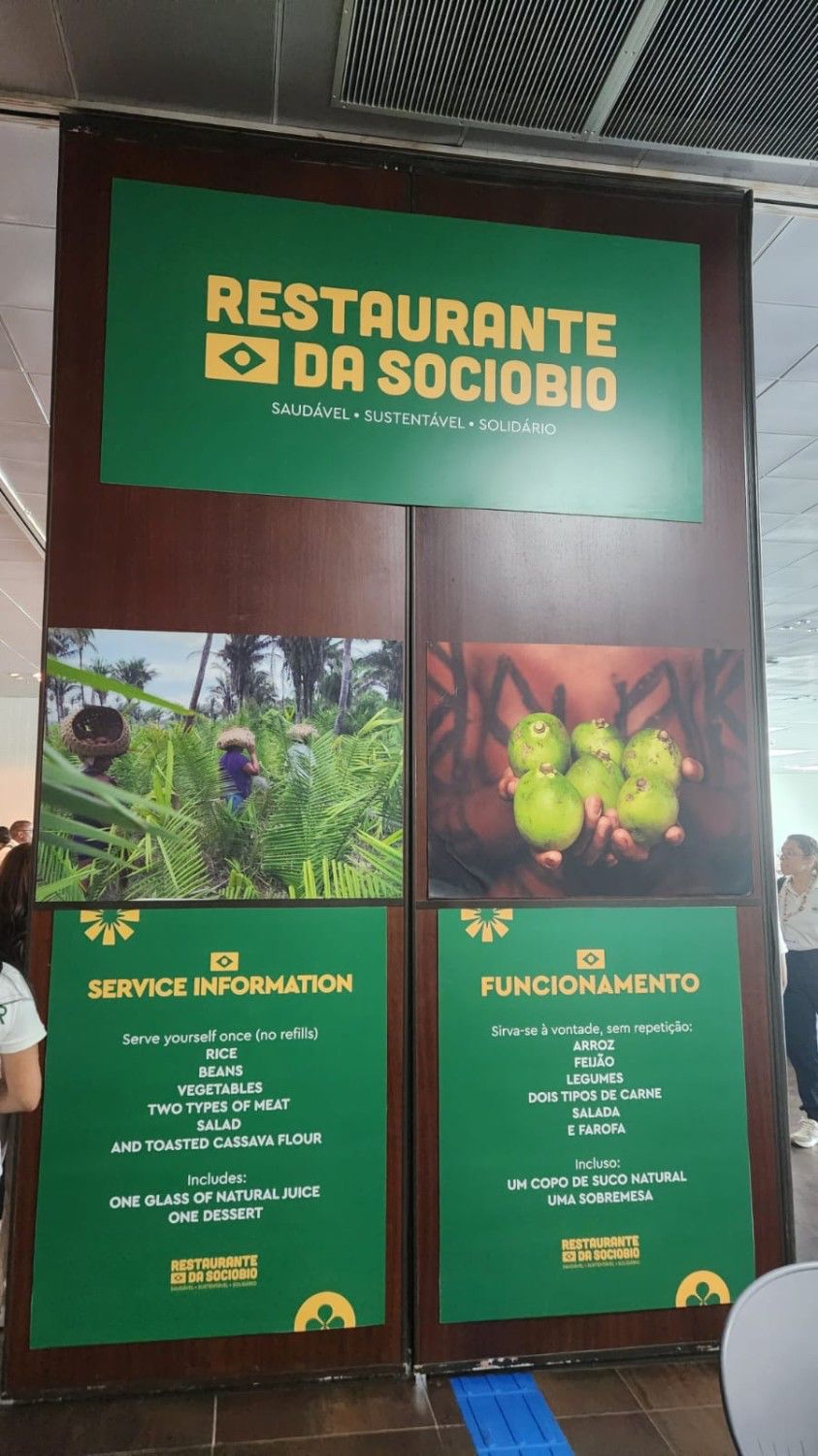
But the message I would like to share with those who didn’t have the chance to be there is called Na Mesa da COP30, in Portuguese — or On the Table of COP30. This was a major landmark for me. In a nutshell, a coalition of NGOs managed to make the COP Presidency apply the same public procurement standards used by Brazil’s National School Feeding Program (PNAE), meaning that at least 30% of the food served should come from agroecological family farmers and traditional communities.
Can you imagine the hard work and political articulation required to make bureaucrats approve a policy like this for a COP? Instituto Regenera lead the way with standing in the shoulders of both the networks for cooperatives and associations and family farmers it has been nurturing for years and very strong advocacy and coalition building skills.
Once the “go-ahead” from the COP Presidency was secured, a massive operation was launched to make the Sociobio Restaurant a reality. Some figures help make this more concrete:
- More than 60 cooperatives and community enterprises engaged
- More than 4,000 meals served per day
- More than USD 1M in purchases from family farming
- More than 100 people working to make it possible
What’s more, eating there cost less than USD $7.50 for an all-you-can-eat meal, including one glass of natural juice and one piece of dessert — also less than I paid for a very small, cold quiche on my first day in the Blue Zone.
All Blue Zone volunteers and COP workers could eat at the Sociobio Restaurant. After 2 p.m., it was opened to all participants. Real food, real taste, real people producing it and making it happen. The contrast with the junk, fast, and expensive food served at ALL previous COPs was so absurd that, as a newcomer, it was hard to believe how innovative this was — and that it had never happened before. In any case, I appreciated it every single day I could.
Finally, speaking about results, I was particularly happy to see that the Food Systems theme — alongside Forest Restoration — played a very relevant role in the non-negotiated pavilions. This visibility was comparable to Energy Transition, which has been the big star of the climate action agenda for far too long. While energy transition can only reduce carbon emissions, Forest Restoration and Food Systems can actually sequester carbon — only they can do that.
Want to learn more about On the Table of COP30?
https://namesadacop30.org.br/english
https://institutoregenera.org.br/
You can find Leonardo here: https://www.linkedin.com/in/leonardo-s-andrade/